
Argentina’s wine industry is one of the country’s oldest cultural institutions and its 11th-largest export sector. It is also in its worst crisis in over 15 years.
Domestic wine consumption collapsed to an all-time low of 15.7 liters per person in 2025, down from 90 in 1970. That’s an 83% decline in a single lifetime. Over 1,000 vineyards have shut down across the country and 3,276 hectares of grape production have disappeared. Exports fell to 193 million liters in 2025, down 6.8% year over year and the lowest volume since 2004. The crisis is hitting from every direction at once: falling domestic demand, exports that can’t compensate, and the economics of growing grapes in Argentina are becoming unworkable.
The collapse in domestic consumption is driven almost entirely by purchasing power that has hit middle- and low-income consumers hardest. These are the people who drank wine every day, for whom wine wasn’t a luxury but a staple. When your real wages fall 40% in two years, as they did for many Argentine workers during the inflation crisis, daily wine is one of the first things to go. The shift accelerated under Milei’s austerity program, which stabilized the currency and brought headline inflation down from triple digits but did so by compressing demand across the entire economy. Wages haven’t caught up. Prices haven’t come down enough. And the people who used to buy cheap table wine by the liter are now buying less of everything.
There’s also a generational and cultural shift happening underneath the economic crisis. Younger consumers are seeking wines with “coherence” and narrative: lighter profiles, lower alcohol, environmentally conscious production, rather than the robust, high-alcohol styles their parents and grandparents drank. The mass-consumption model that sustained the industry for decades is dying, and it’s not being replaced fast enough by the premium model that the export market rewards.
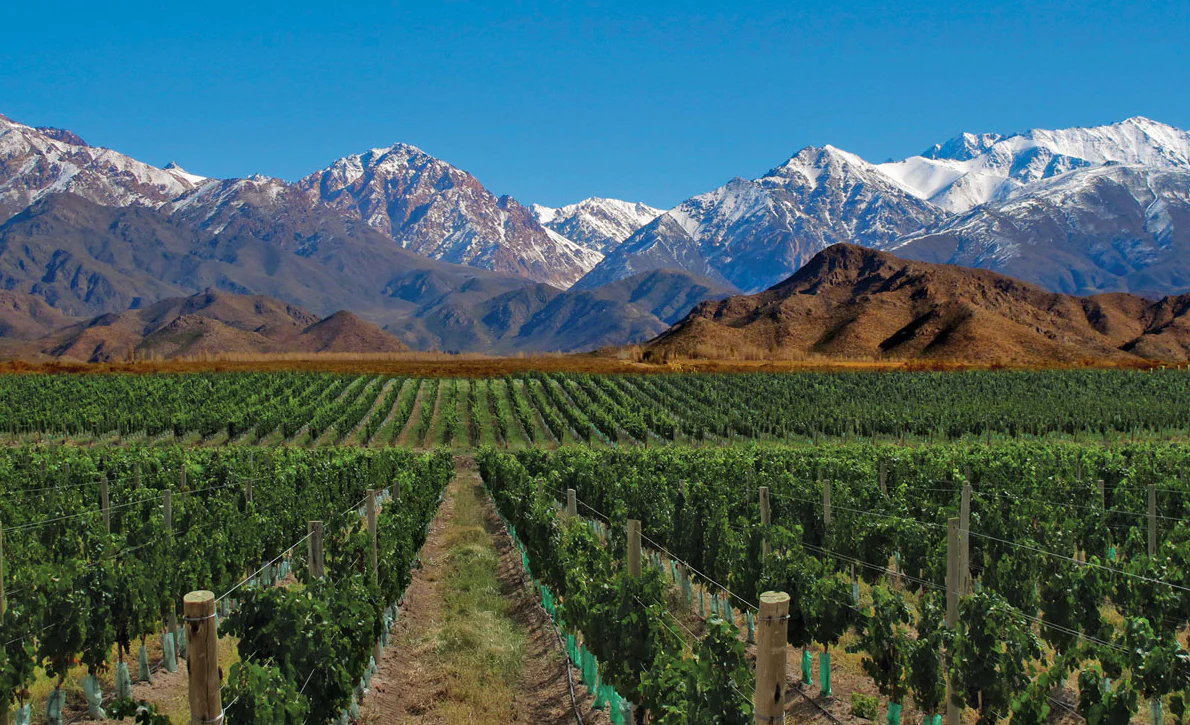
Exports should be the escape valve. They’re not. Argentina is the world’s 11th-largest wine exporter, and Mendoza produces some of the finest Malbec on the planet. But the country faces structural disadvantages that its competitors don’t. Chile, its nearest rival, has free trade agreements with over 60 economies and can enter markets like China at near-zero tariffs. Argentina faces tariffs of 10-20% in most export markets. Trump’s tariffs added roughly another 10% on top of that for the U.S. market specifically.
On top of that, financing is expensive, logistics costs are high, and inflation has made Argentine wines uncompetitive on price even when the quality is there. Argentina’s inflation doesn’t just erode wages. It inflates every link in the supply chain (glass, cork, labels, fuel, electricity) making it more expensive to produce the same bottle year after year while the price consumers are willing to pay stays flat or falls.
The situation is a case study in what happens when monetary distortion meets a real industry built on real capital. Argentine winemakers didn’t make bad wine. They didn’t lose their skills. They didn’t stop investing in quality. What happened is that decades of inflation, currency manipulation, and trade isolation destroyed the purchasing power of their domestic market, priced them out of export competitiveness, and left them competing against Chilean, French, and Spanish producers who operate in stable monetary environments with access to global markets at favorable terms. The vines are still in the ground. The terroir hasn’t changed. What changed is the money: and when the money breaks, everything downstream from it breaks too.