
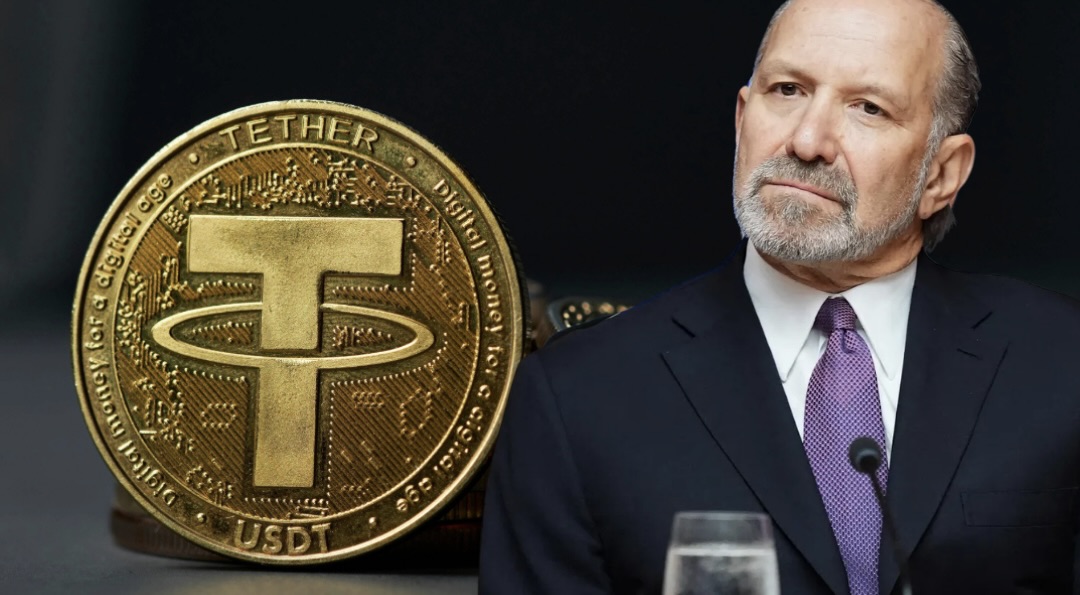
A Tether loan linked to Howard Lutnick’s exit from Cantor Fitzgerald is raising new ethics questions, after filings revealed the stablecoin issuer provided financing to a trust involved in the transfer of control to his family.
The Deal Behind the Divestiture
In October 2025, Howard Lutnick sold his multibillion-dollar ownership stake in Cantor Fitzgerald to trusts benefiting his four children, a move intended to comply with federal ethics requirements after he joined the Trump administration.
Around that same time, one of those entities, Dynasty Trust A, took out a loan from Tether. The size of the loan has not been disclosed. However, a credit filing in New York shows the loan was secured against “all assets” of the trust, including its ownership stake in Cantor.
That detail matters. Because it means the financial structure used to transfer control of Cantor Fitzgerald to Lutnick’s family is now directly linked to Tether, a private company with significant exposure to U.S. regulatory policy.
A Deep Financial Relationship
Cantor Fitzgerald is not a neutral counterparty in this story. It plays a central role in Tether’s operations.
The firm helps manage Tether’s reserves, which the company reports total approximately $192 billion. These reserves back USDT, the world’s largest stablecoin, and represent one of the most profitable pools of capital in global finance.
In addition, Cantor holds a $600 million convertible bond tied to Tether, which could convert into roughly a 5% equity stake. If Tether reaches its reported valuation ambitions, that stake alone could be worth tens of billions of dollars.
This creates a layered financial relationship. Tether is a client. A source of fee revenue. A potential equity upside. And now, a lender into the structure that transferred Cantor into the Lutnick family’s control.
Why Ethics Experts Are Concerned
The arrangement has drawn scrutiny from ethics experts who say it may undermine the intent of federal divestiture rules.
Kathleen Clark, a law professor at Washington University in St. Louis and former ethics counsel for the District of Columbia, described the structure in stark terms:
“This transaction is, in theory, supposed to eliminate a conflict of interest, but in reality, it creates a new one. If Tether’s loan helped Lutnick complete a transaction that will ultimately benefit both him and his children, it’s yet another favor his family owes Tether. And yet another reason for concern that Howard Lutnick may use his government power to benefit Tether, and his children, rather than the public.”
Officials have said Lutnick complied with the terms of his ethics agreement, including divestiture and recusal requirements. But the broader concern is not whether rules were followed. It is whether the underlying incentives have truly been removed.
Policy Alignment and Stablecoin Expansion
The timing of the deal coincides with a broader shift in U.S. crypto policy.
The Trump administration has taken a more favorable stance toward digital assets, particularly stablecoins. The GENIUS Act, passed in 2025, established a regulatory framework that includes provisions beneficial to offshore issuers like Tether, including a multi-year compliance runway.
At the same time, official policy recommendations have explicitly encouraged the expansion of stablecoins as a tool to reinforce U.S. dollar dominance in global markets.
Tether already controls an estimated majority share of the global stablecoin market. That makes any financial or political alignment between the company and policymakers especially consequential.
The Bigger Picture: Incentives, Not Ownership
This story is not about direct ownership. Lutnick divested. The shares are no longer in his name.
But modern financial influence rarely operates through direct control. It flows through incentives, relationships, and capital structures.
In this case, those incentives are layered:
Tether is financially linked to the trust. The trust controls Cantor Fitzgerald. Cantor helps manage Tether’s reserves. And Lutnick now operates inside the U.S. government, shaping economic and crypto policy.
Even if each individual step is compliant, the system as a whole creates alignment between private financial interests and public policy decisions.
Bitcoin vs. the Stablecoin Model
This is where the contrast with Bitcoin becomes clear.
Bitcoin has no issuer. No CEO. No company negotiating with regulators or extending loans behind the scenes. There is no entity capable of forming these kinds of financial relationships with policymakers.
Stablecoins operate differently. They depend on centralized issuers, banking partners, asset managers, and regulatory approval. That structure creates natural pressure points where influence can emerge.
When those relationships tighten, policy can follow.
Why It Matters
The significance of this story is not just the loan itself. It is what the structure reveals.
Stablecoins are becoming systemically important to global finance. But unlike Bitcoin, they remain deeply embedded in the traditional financial and political system.
That means they inherit its incentives, its dependencies, and its risks.
And as this episode shows, when the right relationships are in place, the line between financial alignment and policy influence can become increasingly blurred.