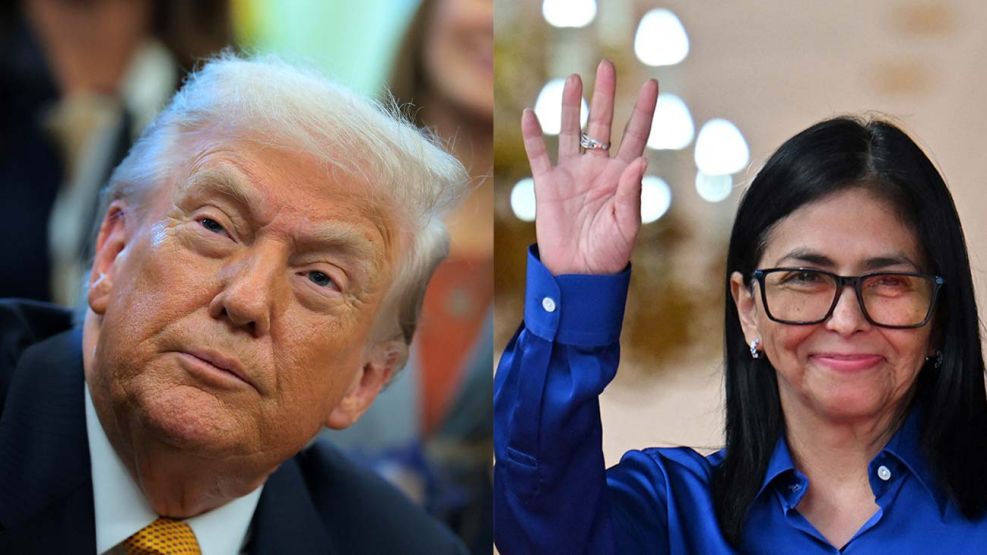
The Trump administration is quietly building a criminal case against Venezuelan interim president Delcy Rodriguez, including a draft indictment for corruption and money laundering, even as the president publicly praises her as America’s new partner.
Four sources familiar with the matter told Reuters that federal prosecutors in the U.S. Attorney’s Office in Miami have assembled possible charges against Rodriguez, and that she has been told verbally she faces prosecution unless she continues to comply with Washington’s demands. The draft indictment centers on Rodriguez’s alleged role in laundering funds from PDVSA, Venezuela’s state oil company, covering activities from 2021 to 2025. The document has reportedly been refined over the past two months.
The story immediately became contested. After a summary appeared on Reuters’ World News morning podcast, Deputy Attorney General Todd Blanche posted on X calling the report “completely FALSE” and questioning how “fake news makes its way to publication.” Reuters responded with a statement standing by its reporting.
Rodriguez, 56, is only in power because the United States put her there. On January 3, U.S. special forces captured Nicolás Maduro in a lightning raid and transported him to New York, where he was arraigned on narcoterrorism and cocaine trafficking charges. Maduro pleaded not guilty and remains in custody awaiting trial. His wife Cilia Flores was also charged, including with drug trafficking, and has also pleaded not guilty.
Rodriguez was Maduro’s vice president. When her boss was seized by American commandos, she became interim president. In the two months since, she has cooperated with the United States extensively. She opened Venezuela’s energy sector to U.S. companies — Energy Secretary Chris Wright toured oil production facilities at a Chevron-PDVSA joint venture alongside her last month. She released political prisoners: the legal rights group Foro Penal confirmed at least 350 people it classifies as political prisoners have been freed since January 8. She fired Maduro ally Alex Saab from his position as industry minister, and then participated in a joint FBI-Venezuelan operation that led to Saab’s arrest on February 4. Saab — a Colombian businessman who U.S. prosecutors say siphoned $350 million out of Venezuela — is now being held by Venezuelan intelligence and is expected to be extradited. A new sealed U.S. money laundering indictment has been prepared against him. If he talks, sources say he could strengthen the criminal case against Maduro.
Trump has publicly praised all of this. At his State of the Union address, he called Venezuela “our new friend and partner.”
But behind the scenes, the administration is building the legal infrastructure to prosecute Rodriguez herself if she stops cooperating. The draft indictment is one of several tools. Separately, U.S. officials have given Rodriguez a list of at least seven former high-level party officials, associates, and family members that Washington wants her to arrest or hold for potential extradition. This was first reported by Spain’s ABC newspaper. Among those already detained: media mogul Raul Gorrin, head of the Globovisión TV network, who was arrested by Venezuelan intelligence within the past month and faces multiple federal charges in the U.S. tied to bribery, money laundering, and PDVSA corruption.
There is a legal complication. Venezuelan law prohibits the extradition of Venezuelan nationals. Saab, a Colombian who was granted Venezuelan citizenship by Maduro, may face this barrier. Other figures on Washington’s list almost certainly will. How Rodriguez navigates this — and whether the U.S. will accept anything less than full extradition — remains an open question.
The Department of Justice declined to comment. The White House and State Department did not respond to Reuters’ questions. Venezuela’s communications ministry did not respond to detailed questions about the charges. Reuters noted that drafting an indictment does not guarantee charges will be brought before a grand jury, and it could not determine whether prosecutors had begun presenting evidence to one.
Why This Should Matter to You
This is the playbook. The United States captured Maduro, installed his deputy, publicly treated her as a partner, gave her access to American oil investment — and simultaneously built a criminal case to use against her if she ever stops doing what Washington asks. It is coercive diplomacy operating through the Department of Justice. The indictment may never be filed. That’s the point. The threat is the tool. Rodriguez cooperates because the alternative is becoming the next Maduro — pulled from her own country and arraigned in a New York courtroom. This is how the U.S. manages client states in the 21st century: not with ambassadors and treaties, but with sealed indictments and extradition lists. Whether you think that’s justified hardball against a corrupt regime or an imperial power dictating terms to a sovereign nation depends entirely on your framework — but either way, the mechanism should be understood for what it is.