
Iran has a new supreme leader. And it’s exactly the person everyone expected and no one wanted.
Mojtaba Khamenei, the 56-year-old second son of the slain Ayatollah Ali Khamenei, was named Sunday by the Assembly of Experts as the third supreme leader in the Islamic Republic’s history. The IRGC and Iran’s entire political establishment immediately pledged allegiance. Iran’s president called it a “new era of dignity and strength.”
The selection was not subtle. IRGC commanders began pressuring Assembly of Experts members as early as March 3, with repeated contacts and increasing pressure to vote for Mojtaba. The vote was held online to avoid serving 88 of Iran’s most important figures on a silver platter to the U.S., and members who argued against Khamenei were cut off.
Mojtaba Khamenei has never held elected office. He has never given a public address. Many Iranians have never heard his voice. But he’s spent decades as the invisible hand inside the regime, cultivating deep ties to the IRGC, controlling access to his father, and managing an economic empire that, according to Western media reports, spans billions of dollars across multiple countries. Leaked U.S. diplomatic cables called him “the power behind the robes.”
Arguably, Khamenei has little to lose. During the first waves of attacks, his father, mother, wife, and one sister were all killed. He was reportedly not present.
Trump had made his position clear: “Khamenei’s son is unacceptable to me.” He told ABC that whoever Iran picks “is not going to last long” if they rule without his approval. Israel’s defense minister warned any successor would be a legitimate target for assassination.
And the new leader’s first act was defiance. Though on Saturday Iran’s President publicly apologized for Iranian strikes hitting Gulf neighbors and promised to stop attacking them, hours after being named Supreme Leader, Khamenei launched fresh missile and drone attacks on Israel and across the Gulf. Foreign Minister Araghchi went on NBC’s Meet the Press and rejected ceasefire calls outright.
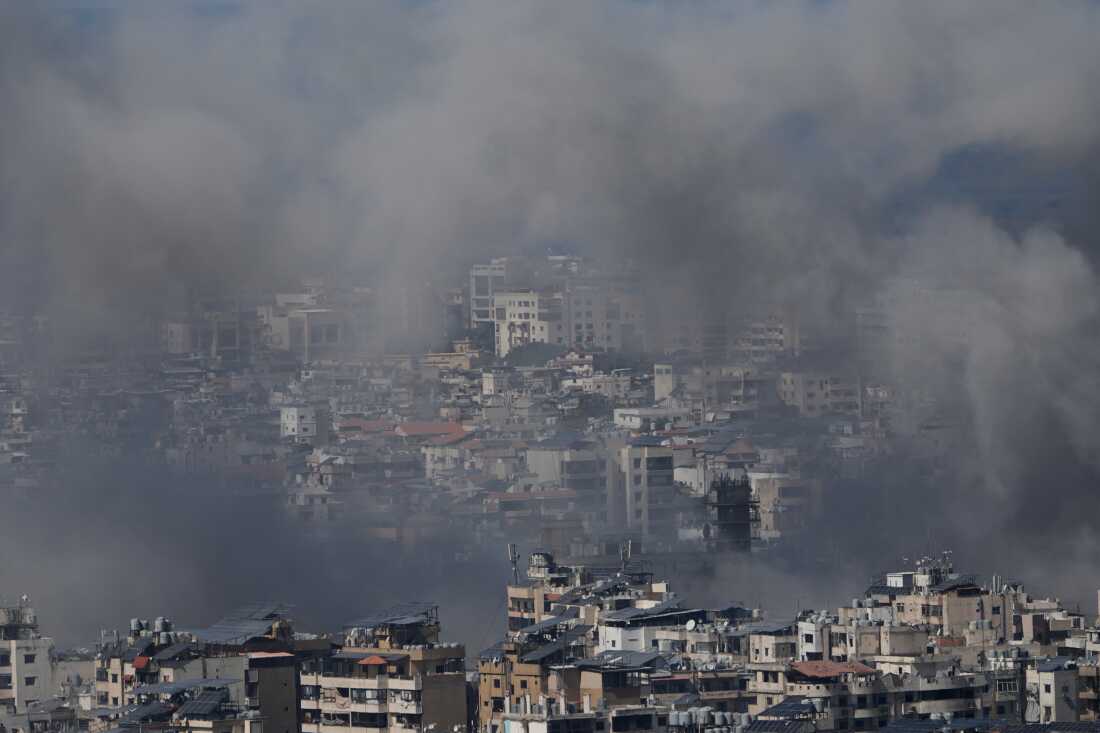
The war has now killed more than 1,200 in Iran. Nearly 400 are dead in Lebanon, including 83 children. Eight U.S. service members have been killed. Eleven people have died in Israel. Iran hit a desalination plant in Bahrain, a country with no natural freshwater.
The U.S. State Department ordered nonessential staff and families out of Saudi Arabia, Bahrain, Iraq, Jordan, Kuwait, Lebanon, Qatar, the UAE, and consulates in Karachi and Adana, Turkey. Some 32,000 Americans have left the Middle East since February 28.
Hegseth told 60 Minutes that the U.S. and Trump will set “the terms of surrender.” When asked what that looks like: “It means we’re fighting to win. It means we set the terms. We’ll know when they’re not capable of fighting.” Trump said he’ll decide when it ends — together with Israel, but with Washington having “the final say.”
Day 10. No ceasefire. No negotiations. No off-ramp. A new supreme leader whose entire incentive structure is to fight, not fold, to preserve the regime his father built and his family now controls.